The Craft
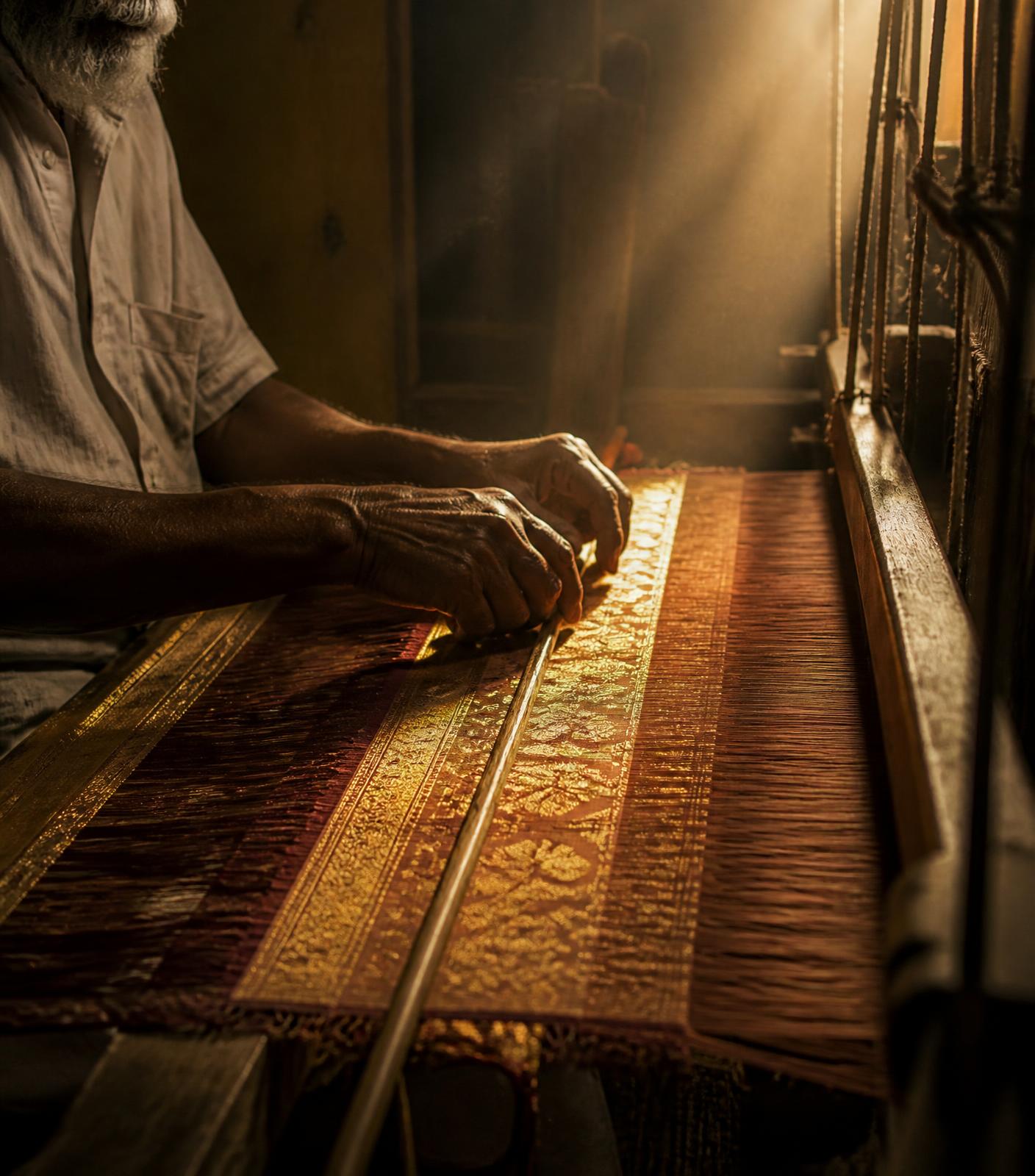
Eleven weeks, two weavers, one loom
Nothing here is fast. That is the entire point.
01
Yarn
Mulberry silk sorted by hand for lustre and evenness. More is rejected than kept — a flaw in the warp shows for the life of the saree.
02
Naksha
The design is translated into punch cards strung above the loom. A single bridal pallu can need over four thousand of them.
03
Dye
Small-batch dyeing, matched against a physical swatch rather than a screen. Natural indigo and madder wherever the design allows.
04
Loom
Two weavers work in rhythm on a pit loom, one at the pedals, one at the shuttle. A few centimetres a day, for eleven to fourteen weeks.
05
Zari
Silver wire gilded in gold, wound on a silk core, woven in — never printed on. It is what gives the pallu its weight.
06
Finish
Washed, pressed, inspected against the fold test, and wrapped in muslin with the weaver's name on the card.
The fold test
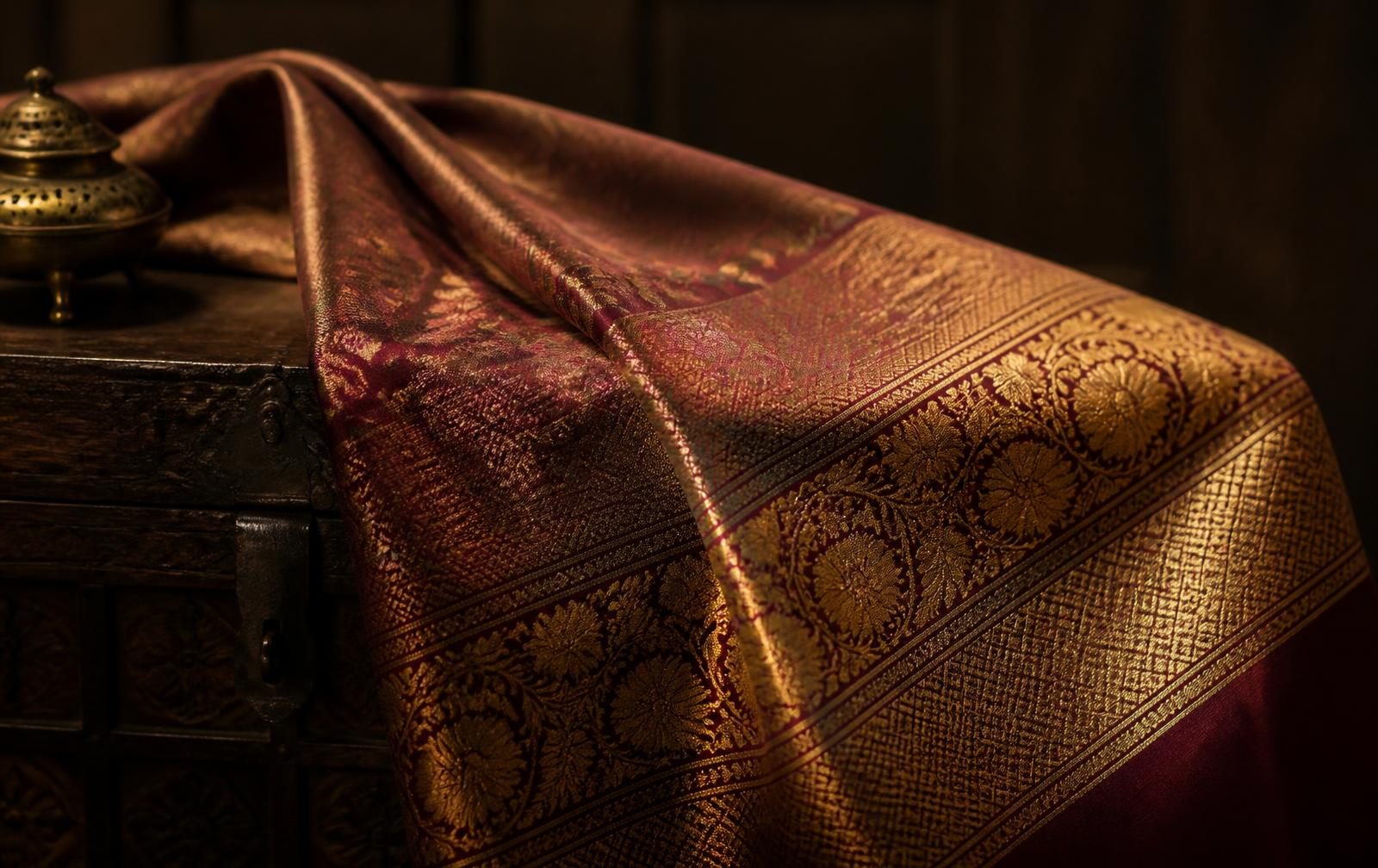
A saree is judged on its reverse
In kadhwa weaving the motifs are woven in rather than cut, which means the back of the pallu is almost as finished as the front. It takes longer and costs more, and it is the single clearest signal that a saree was made by hand for someone who will keep it.